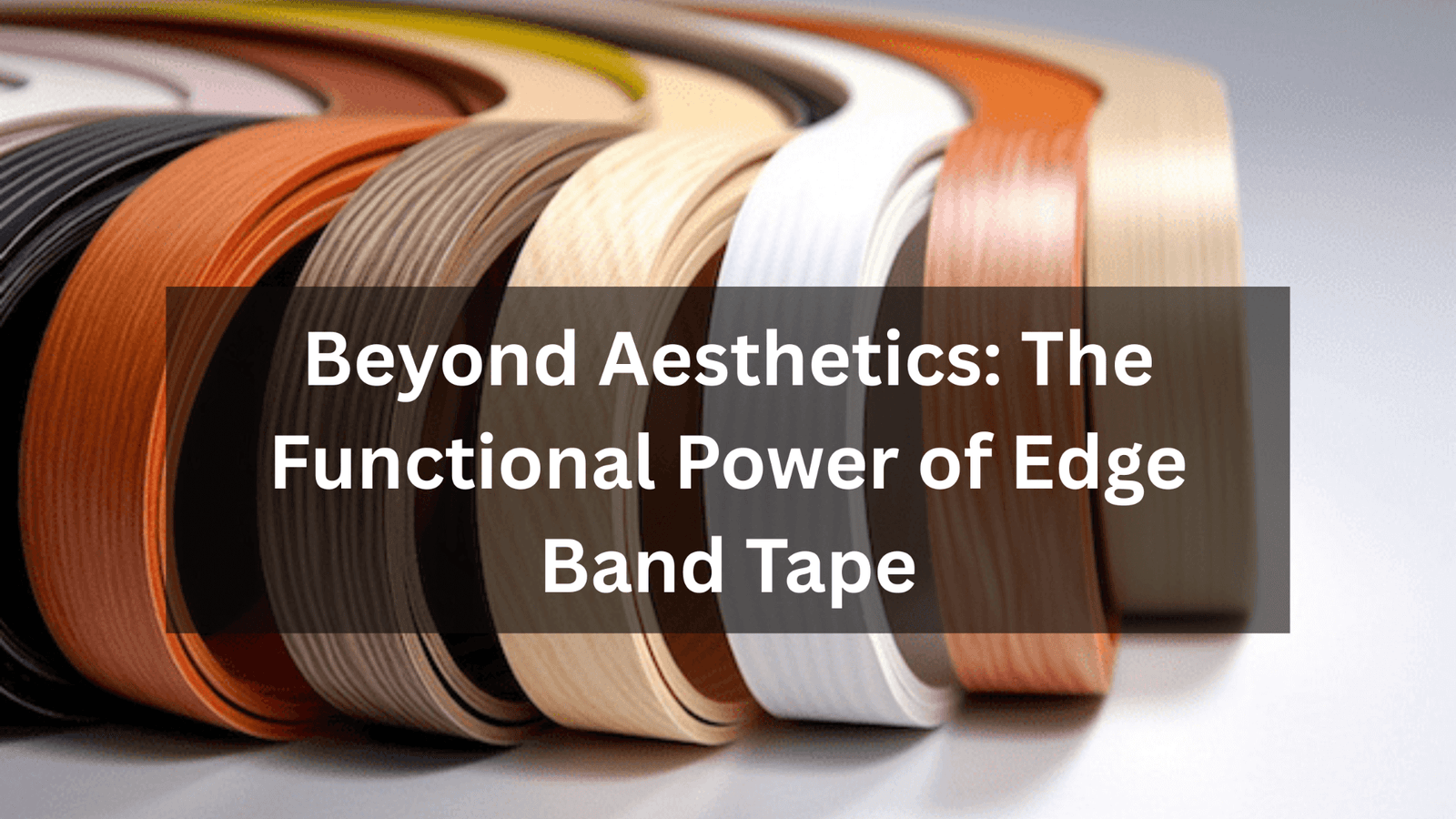
Beyond Aesthetics: The Functional Power of Edge Band Tape
When people think of edge band tape, the first thing that often comes to mind is visual appeal, giving furniture that clean, finished look. But edge band tape is far more than a cosmetic add-on. It plays several critical roles in protecting, enhancing, and prolonging the life of furniture and interior surfaces. In this blog, we’ll delve into the functional aspects of edge band tape, why it matters, how it works, and how to choose and apply it wisely.
1. What Is Edge Band Tape?
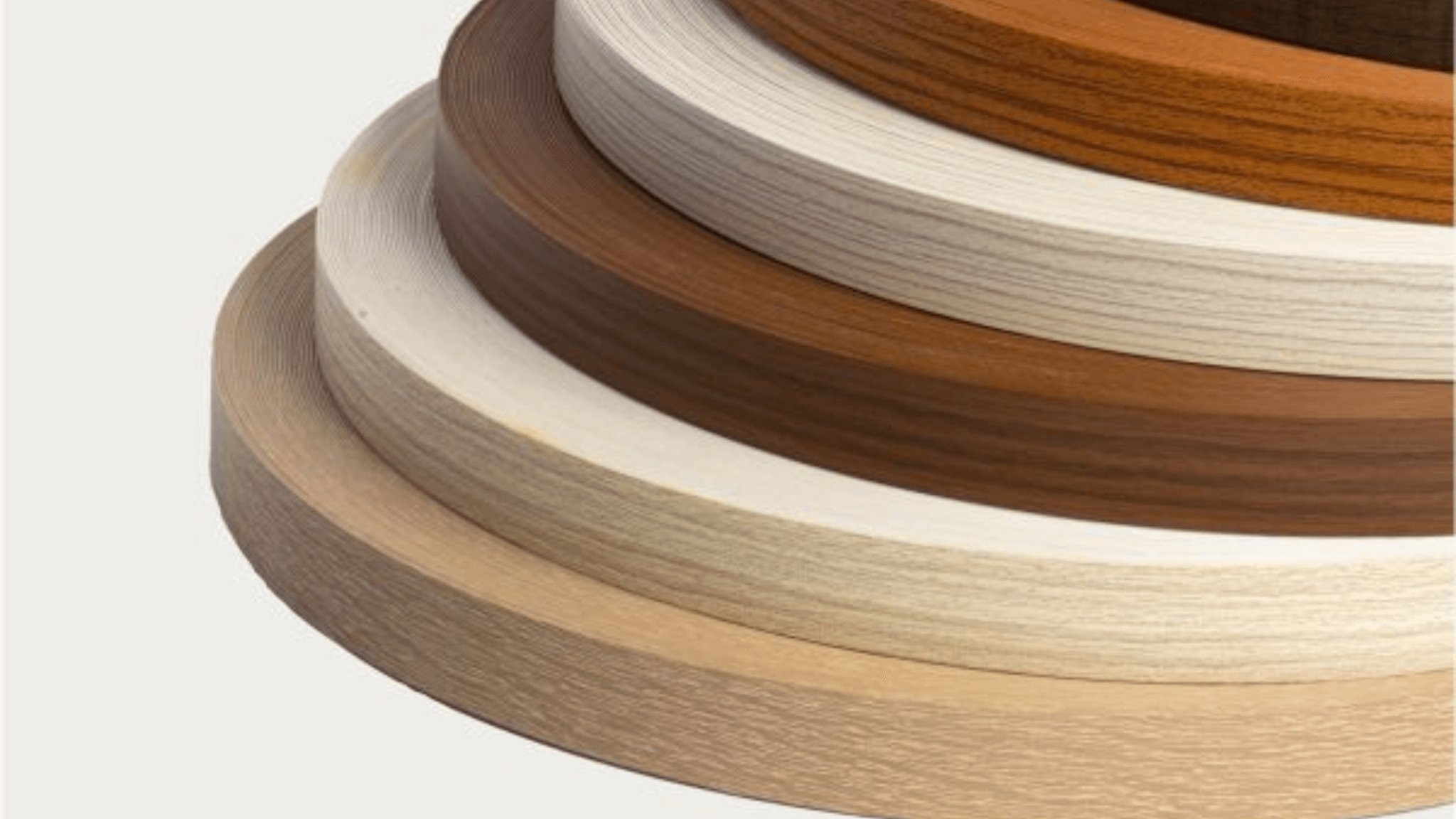
Edge band tape is a thin strip of material, typically PVC, ABS, acrylic, or melamine, applied to the exposed edges of boards like plywood, particleboard, MDF, or laminate panels. Its primary purpose is to conceal the raw edge (which is more porous and vulnerable) and create a smoother, more durable profile.
At OSLO, our edge band tape line includes solid finishes, wooden finishes, sparkle finishes, and metallic finishes, offering a wide variety of looks while delivering high performance.
2. The Functional Benefits: Beyond Just Looks
Here are the major non-aesthetic benefits of using a good quality edge band tape:
Edge Protection & Impact Resistance
- Seals vulnerable edges : The cut edges of boards are more prone to chipping, peeling, or flaking. Edge band tape covers and protects them.
- Absorbs and resists impacts : Especially in high-traffic areas or on frequently touched furniture (desks, shelves, cabinetry), edge band tape helps the edges withstand knocks and abrasions better than raw edges.
Moisture & Humidity Barrier
- The raw edges of wood-based panels absorb moisture, swell, or warp over time. A high-quality edge band (especially a PVC or water-resistant grade) acts as a barrier, reducing moisture infiltration.
- In humid, damp or wash-prone environments like kitchens, bathrooms, or laundry areas, edge band tape helps prevent swelling, delamination, and edge degradation.
Termite, Borer & Pest Resistance
- Many untreated wood-based panels are susceptible to pests. A properly sealed edge helps reduce the points of entry.
- At OSLO, one of the key claims is “100% Termite & Borer Proof” for the edge banding range.
Cleanability & Hygiene
- Raw board edges tend to trap dust, dirt, and grime. A sealed edge is smoother, easier to wipe, and less likely to accumulate debris.
- It also helps maintain hygiene in places like kitchens, hospitals, and food prep areas.
Structural Stability & Longevity
- By protecting edges from damage, swelling, and wear, edge band tape contributes to the structural integrity of the panel over
time.
- Proper edge banding slows down wear-and-tear at vulnerable edges, thereby increasing the usable life of furniture pieces.
Versatility & Repairability
- Edge band tape makes it easier to repair or re-finish furniture. If an edge is scratched or worn, in many cases you can replace or repair the tape rather than replace the entire panel.
- It also allows modular design or retrofitting, you can apply edge banding to existing installations to refresh or repair edges.
3. How Edge Band Tape Works: Material, Adhesive & Application
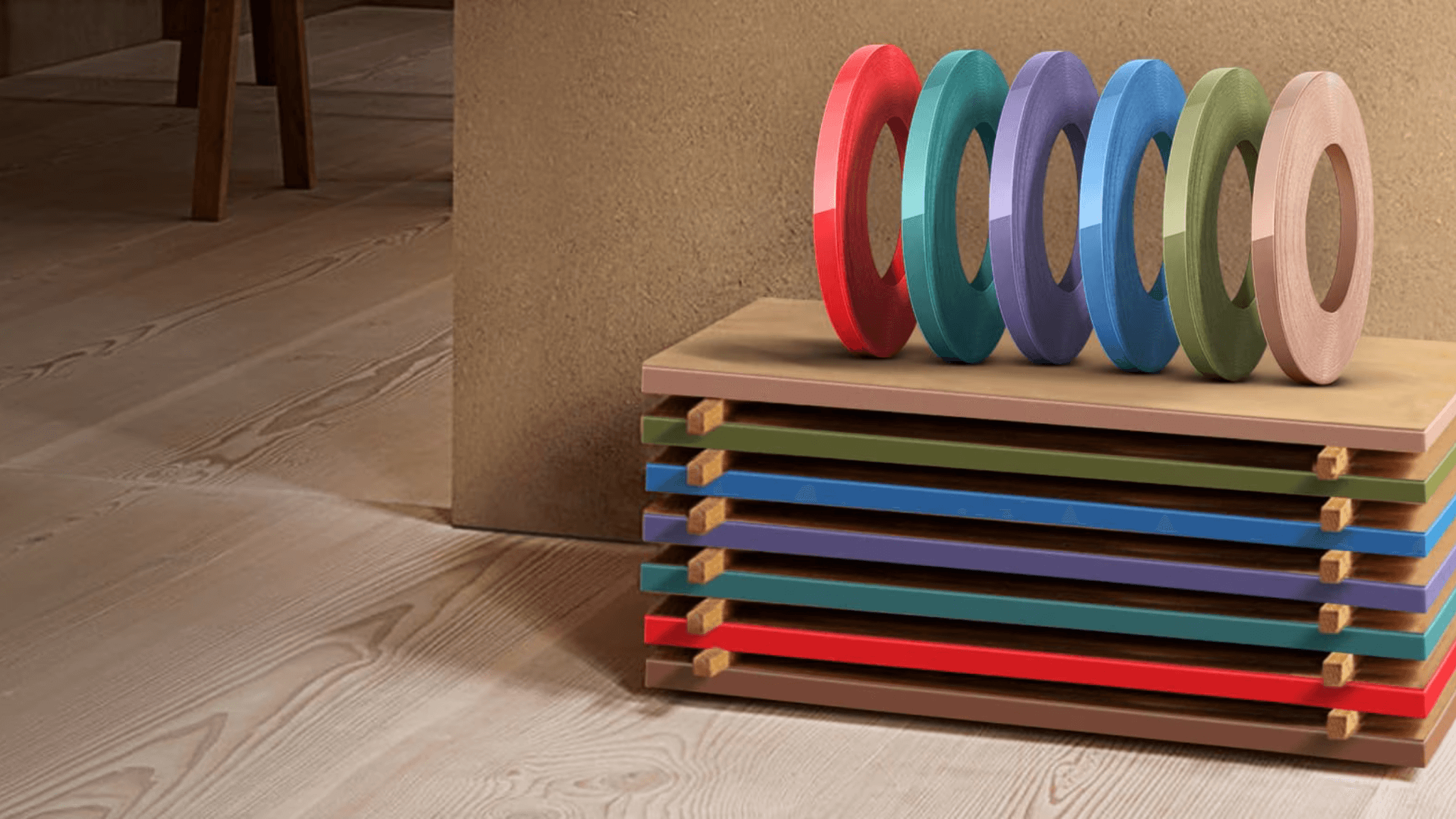
To fully understand the functional power of edge band tape, it helps to look under the hood, how the material and the method of adhesion impact performance.
Material Choices
- PVC / Modified PVC: Highly common, flexible, economical, and water-resistant.
- ABS: More rigid, better heat resistance, and sometimes safer (free from chlorine).
- Acrylic / PMMA: Offers a high-gloss, modern finish and good durability, though more expensive.
- Melamine / Paper-based: Lower cost, used for less demanding environments or temporary installations.
Each material has its trade-offs in terms of flexibility, durability, UV resistance, cost, and environmental impact.
Adhesive & Bonding
- Many edge band tapes come with pre-applied hot-melt adhesive ( EVA, PUR, etc.). You heat it (via an iron or edge-banding machine) so that it flows and bonds with the substrate.
- PUR adhesives (polyurethane reactive) offer better resistance to heat and moisture, giving stronger, longer-lasting bonds.
- The key is not just the quality of the adhesive, but also how well the heat and pressure application is controlled during installation.
Application & Finishing
- Prepping the substrate: Edges must be smooth, clean, and free from dust or debris.
- Proper heat + pressure: To activate the adhesive and ensure a strong bond, especially at corners and ends.
- Trimming, scraping, and buffing: To remove excess tape, round the corners nicely, and blend it in seamlessly.
- Edge sealants or top coats: In some cases, an additional sealant layer is applied at the joints or ends to further protect the bond line from moisture ingress.
4. Use Cases & Applications: Where Edge Banding Adds Value
Here are some real-world contexts where edge banding really makes a difference, beyond just looking pretty.
- Kitchen cabinets & counters: Exposure to moisture, heat, steam, edges are under constant attack. Quality edge banding helps prevent swelling and edge breakage.
- Bathrooms, laundries, wet areas: Protection against humidity and occasional splashes.
- Workstations, desks, and office furniture: Frequent impacts, friction, edge handling.
- Retail fixtures and display units: High wear from merchandise movement, cleaning, and customer handling.
- Modular partitions, cladding, panels: Especially in commercial interiors where panel edges may be visible or subject to refurbishment.
- Retrofit / repair work: Upgrading older furniture with fresh edge bands to extend life and refresh aesthetics.
5. Installation Tips & Best Practices
To extract the full functional value of edge band tape, installation matters just as much as the material itself. Here are some best practices:
- Pre-clean and smooth the substrate edge: Remove burrs, dust, or sanding residue.
- Allow acclimatization: Let both the tape and the substrate come to ambient temperature to avoid thermal stress.
- Set correct heat/temperature: Use recommended settings for adhesive (EVA / PUR) and material type.
- Maintain steady feed and pressure: In edge banding machines, ensure proper tension and guide alignment.
- Ensure overlap/flushness at ends: Leave minor overlaps to trim later; avoid gaps.
- Precise trimming & finishing: Use sharp knives, scrapers, or end cutters; round edges subtly to avoid sharp ridges.
- Seal joint ends if required: Use end sealers, varnish, or bonding agents to prevent moisture infiltration.
- Inspect & test: Carefully inspect for delamination, bubbles, or gaps. In high-demand environments, test a sample under humidity or temperature stress.
6. Maintenance & Longevity
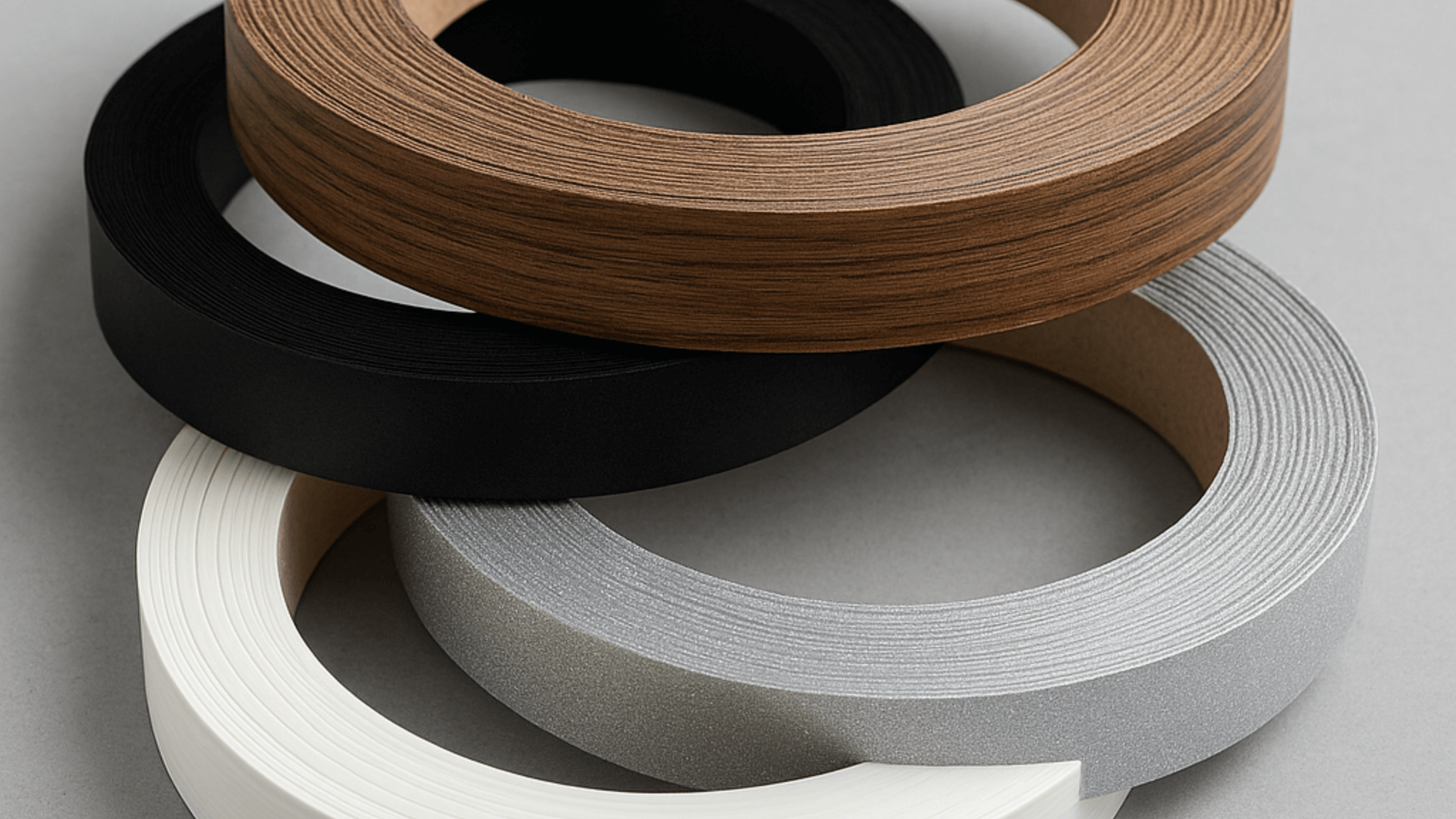
- Clean gently: Use mild detergents or soap solutions; avoid harsh solvents that can degrade adhesives.
- Avoid prolonged moisture exposure: While good edge banding mitigates this risk, constant water exposure accelerates failure.
- Protect from UV / direct sun: Some tapes may fade or degrade under prolonged UV exposure; choose UV-stabilized options for exposed edges.
- Repair promptly: Small chips or peeling can usually be repaired by reheating and pressing, or by local replacement, preventing further damage.
7. The OSLO Advantage
At OSLO Edge Band Tape, the mission isn’t just about making edges look good, it’s about delivering durable, high-performance edge solutions. Some of the standout features we emphasize:
- 8+ years of expertise in manufacturing edge band tapes and related interior/exterior elements.
- Offerings like solid, wood, sparkle, and metallic finishes to suit different design intents.
- Emphasis on functional performance, water proofing, recyclable material, termite & borer protection, ease of cleaning, swift installation.
- A combination of quality raw materials, precise manufacturing, and timely delivery aimed at architects, interior designers, OEMs, builders, wholesalers and retailers.
By choosing OSLO, you’re not just getting a decorative edge, you’re investing in a barrier, protector, and performance enhancer for your furniture.